Selection Guide
How to Choose the Right USB Wall Outlet
Use this guide to compare common USB receptacle configurations before reviewing individual models.
Selection should consider amperage, port type, total output, PD support, GaN design, device depth,
tamper-resistant requirements, project environment, and charging expectations.
Port Type
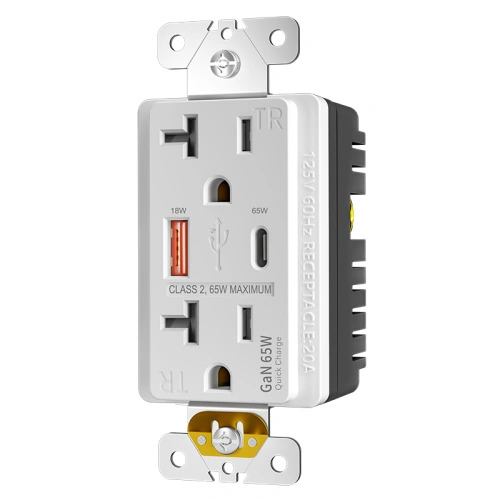
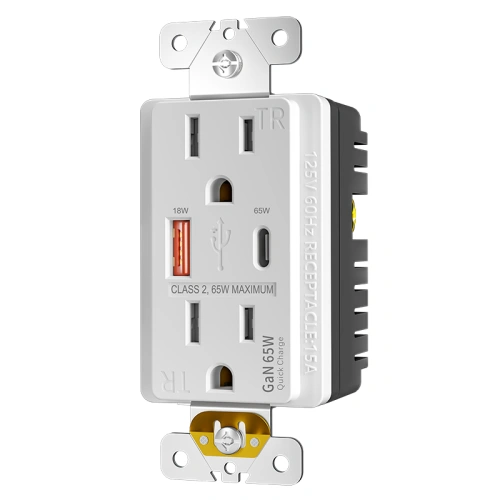
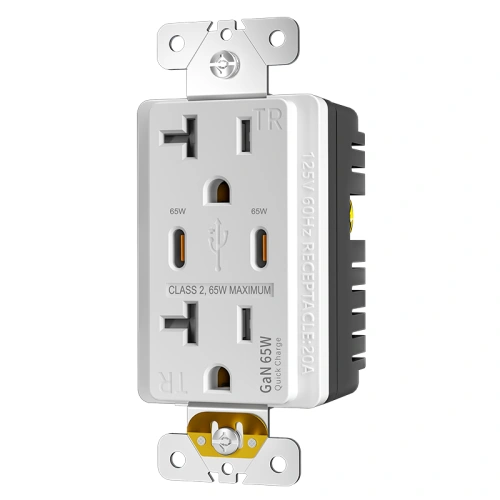
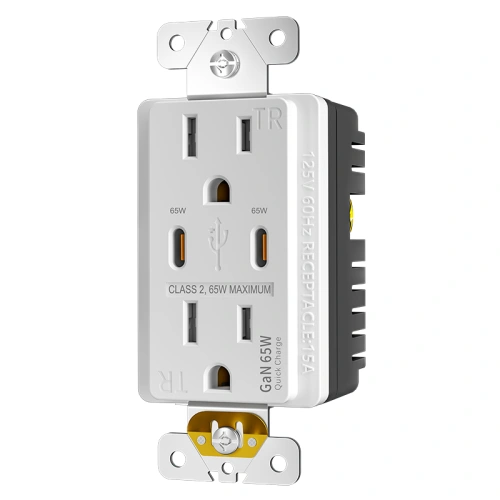
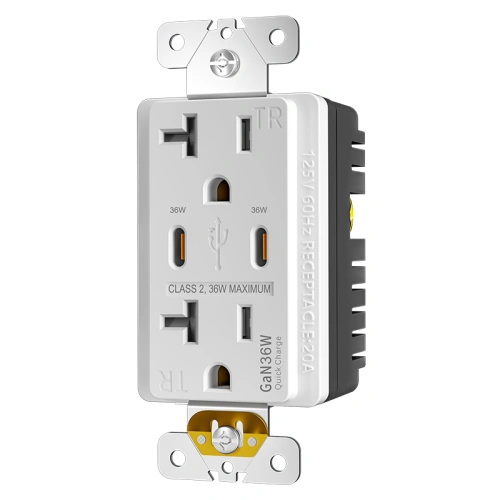
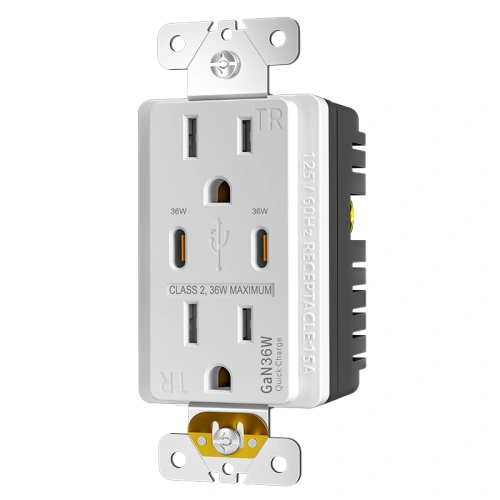
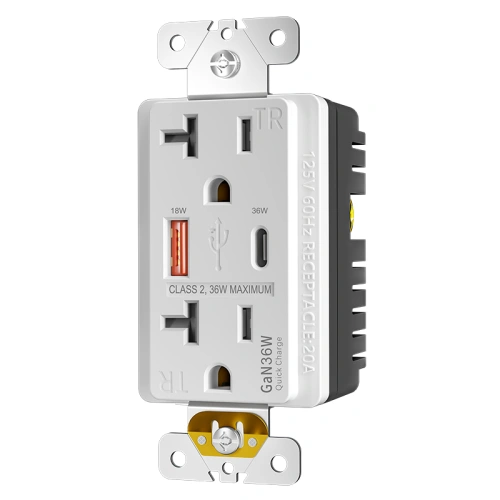
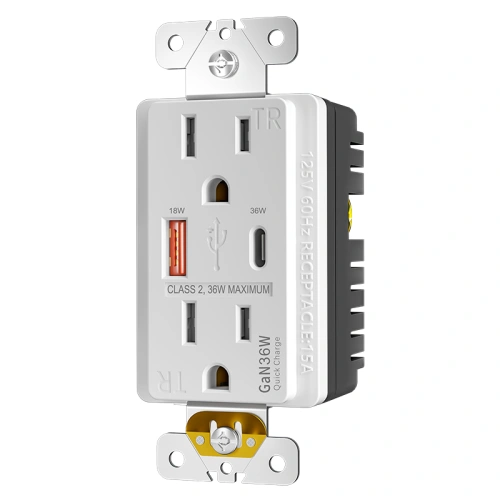
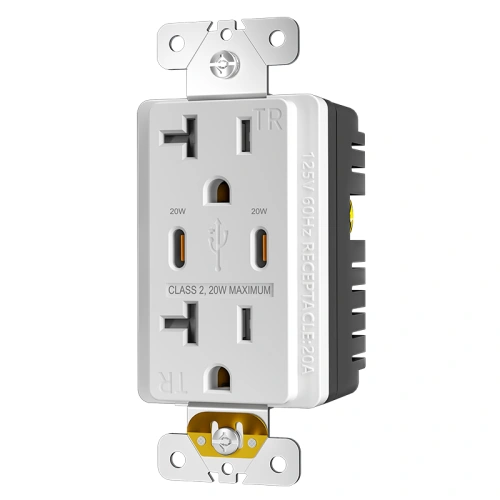
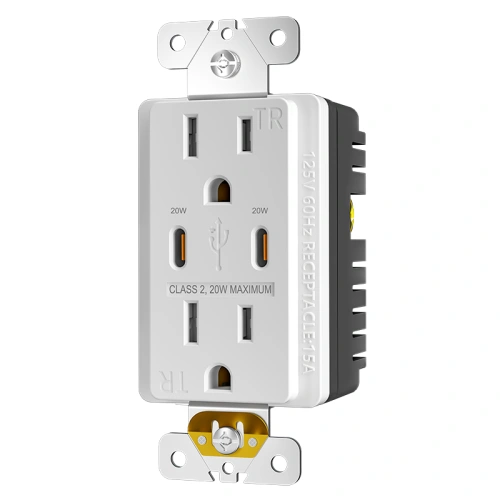
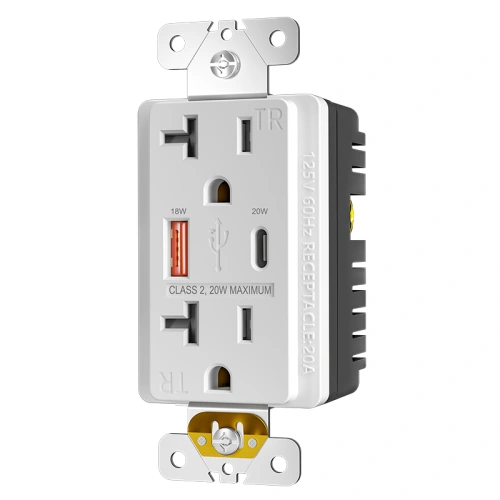
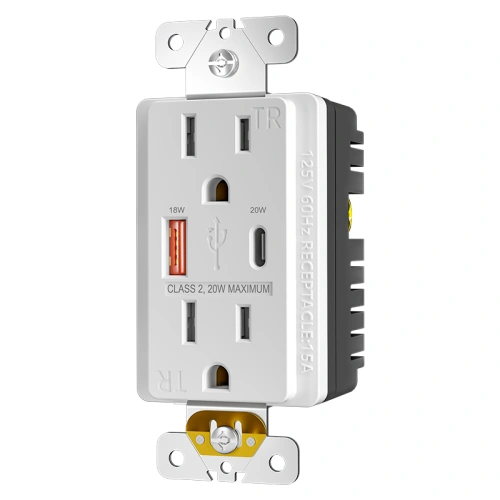
USB-A + USB-C vs Dual USB-C Outlets
USB-A + USB-C
Retrofit, hospitality, and mixed-device projects where both legacy and newer charging cables may be used.
Dual USB-C
Modern projects focused on newer phones, tablets, compact laptops, and USB-C charging adoption.
Port selection should follow the devices expected in the space, not only the current lowest-cost outlet option.
Charging Output
20W / 36W PD vs 65W GaN USB-C
20W or 36W PD
Phone, tablet, guest room, office, and general built-in charging applications.
65W GaN USB-C
Higher-output charging needs where compatible laptops, tablets, or high-power USB-C devices are expected.
Charging speed depends on the outlet output profile, the connected device, and the cable used by the end user.
AC Rating
15A vs 20A USB Receptacles
15A USB Outlet
Common residential, hospitality, multifamily, and light commercial replacement needs.
20A USB Outlet
Projects requiring 20A receptacle configuration, 5-20R compatibility, or higher-duty specification alignment.
Confirm the branch-circuit rating, receptacle configuration, and project specification before choosing 15A or 20A models.
Face Type
TR vs Non-TR USB Receptacles
TR USB Outlet
Dwelling units, guest rooms, dormitories, student housing, and other projects where tamper-resistant receptacles are specified.
Non-TR USB Outlet
Project-specific sourcing needs where the specification does not require a tamper-resistant receptacle face.
USB charging ports do not replace the need to confirm whether the AC receptacle face must be tamper-resistant.
Advanced Note
High-Output USB-C, Box Depth, and Cable Compatibility
High-output USB-C receptacles can require more internal depth than standard models because the AC receptacle and the integrated USB charging power supply share one device body. Before approving bulk orders, confirm wall-box depth, wiring method, wallplate fit, and the listed PD output. Most USB outlet sourcing decisions still come down to amperage, port configuration, PD output, TR requirement, color, and packaging — confirm those against the expected device mix in the final installation.