Tamper-Resistant Receptacle Replacement: What I Should Have Put on the PO (NEC 406.4(D)(5))
In October I ordered twenty thousand 15A duplex receptacles. Standard, non-TR. My supplier confirmed that twice — once in the quote, once again before the cartons shipped — and I confirmed it back both times. The order was right against what I asked for.
Months later I was staring at a project list that needed five thousand of them tamper-resistant, and I sent the kind of email you regret while you’re typing it: why did you ship me all standard? They pulled the thread and sent it back to me — my own messages, non-TR confirmed twice. It was my line that was wrong, not their carton.
I ended up asking whether they could overnight a few thousand TR units before their holiday shutdown, and they ran three thousand for me before they closed. I was lucky. Most of the time there is no factory still open to bail you out.
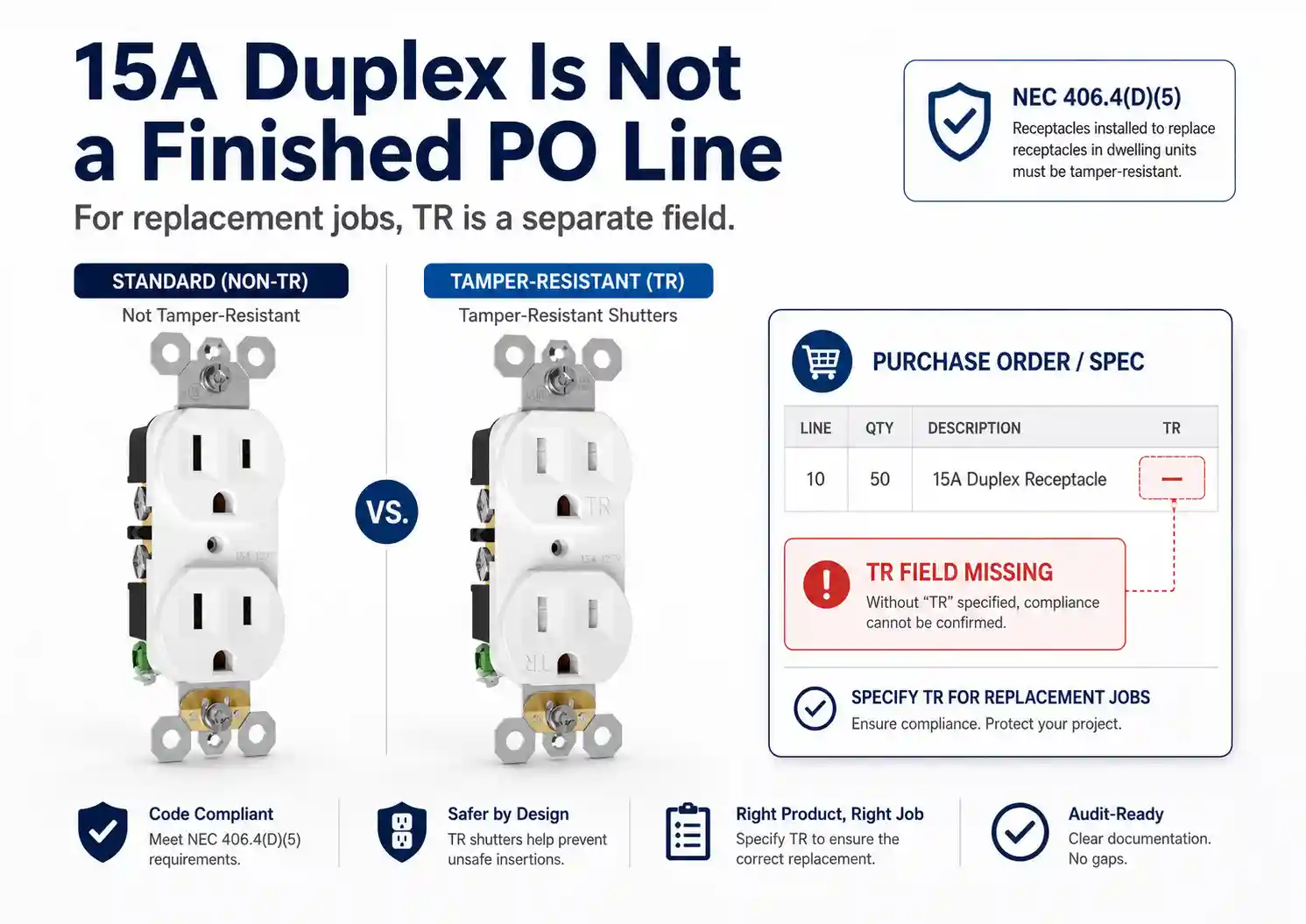
That whole mess started on one line of a purchase order. “15A duplex receptacle, standard” looked complete. It wasn’t, because it never said TR, and the project did.
The wall can be grandfathered. The receptacle I ship into it can’t
The thing I had backwards is the thing a lot of buyers have backwards. An existing non-TR receptacle sitting in an old wall is usually fine to leave alone — older installations get grandfathered, and nobody’s forcing a rip-out. So I’d assumed “old building, replacements, no big deal, send standard.”
Replacement is a different question from leave-it-alone. Under NEC 406.4(D)(5), when a receptacle is replaced at a location that requires tamper-resistant receptacles, the replacement has to be a listed TR type. The grandfathering protects the old device that stays in the wall. The moment I ship a new one to go in its place, that new one follows current code for that location. My carton wasn’t being judged against 1990; it was being judged against the edition the inspector was holding.
There’s one exception I now keep in my head, because it’s the one that actually saves money: a non-grounding receptacle replaced like-for-like with another non-grounding receptacle is not required to be TR, under 406.4(D)(2)(a). That’s a narrow case — old two-prong, no ground, swapped for the same — and I don’t blur it with a normal grounding-type replacement. Everywhere the location is on the 406.12 list, the replacement is TR. Everywhere the location is on the 406.12 list, the replacement is TR.
“15A duplex” is not a finished line
What I learned the expensive way is that a replacement line carries more than amperage and a face style. Each of these is a separate “must-be,” and one doesn’t buy another. The table is the checklist I now run before I send an order up to my supplier or accept one from a customer downstream.
| Field on the line | What makes it required | Replacement rule | What I can’t substitute for it |
|---|---|---|---|
| TR | Location is in the 406.12 list (dwellings, garages, hotel rooms, child care, and more) | 406.4(D)(5) | A GFCI is not a TR. A WR is not a TR. |
| WR | Damp or wet location | 406.4(D)(6) | TR doesn’t make a device weather-resistant |
| GFCI protection | A 210.8 location (kitchens, baths, outdoors, and more) | Provided by GFCI device or upstream protection | Doesn’t satisfy the TR requirement on its own |
| AFCI | The branch circuit falls under 210.12 | AFCI receptacle or breaker | Separate from TR, WR, and GFCI |
| Rating | 15A vs 20A circuit and load | Match the circuit | Face style says nothing about rating |
| Face style | Duplex vs decorator opening | Buyer/spec choice | Style is not a grade or a protection class |
The line I wrote named two fields and left four to chance. On a location that required TR, “left to chance” got answered at the jobsite, and the answer came back to me.
A carton of non-TR units can be electrically perfect and still be the wrong stock
Here’s the part that keeps me careful now, because it’s where my money sits. The twenty thousand standard units I had were fine. Listed, working, nothing wrong with them electrically. That was exactly the trap: a good product felt like the right product, and it wasn’t.
A non-TR carton aimed at a TR-required replacement is the wrong SKU, not a defective one. And wrong-SKU stock is the worst kind to hold, because it’s hard to push in either direction. My supplier won’t take it back as defective — there’s no defect. My downstream customer won’t take it for the job — it won’t pass. It just sits on my shelf as money I already spent. The cheap non-TR lots that float around the market are tempting for exactly the reason they’re risky: the price looks right because the SKU is the wrong one for where TR is now required.
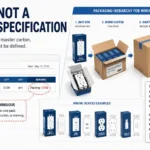
So at intake I read the carton, not just the invoice. If my supplier marks to my own SKU, I check it against what the order actually needs. If there’s no SKU and they default to a full product name on the box — something like “15A TR Standard Receptacle” — I read that line, because that’s where TR either is or isn’t, and the box is the last place I can catch it before it’s mine.
When a customer wants to return a TR outlet that’s “hard to plug into”
The other return I see runs the opposite direction: a downstream customer pushes back a TR receptacle because a plug won’t go in, and calls it defective. Before I accept that one back, I check the mechanism, because the resistance is the feature.
A TR face has spring-loaded shutters that only open when both slots are pressed at the same time, which is what a normal plug does and what a single object can’t. A blade going in at an angle, a bent prong, or pressure on one slot won’t open it — that’s the shutter doing its job, not failing at it. The fix is usually a straight, even insertion. A unit that won’t take a properly aligned plug, with both blades square, is the one that’s actually wrong, and that’s the one I’ll route back up to my supplier and ask for their plug-insertion test record on. The same plug-fit behavior is worth understanding alongside what plug-retention testing actually covers, so I’m not eating returns that were never defects.
What I can lock on the paper, and what the inspector decides on the wall
I’ve drawn a clear line around what’s mine to control. I can put TR — or WR, GFCI, AFCI — into the purchase order I send up and the confirmation I send down. I can require the marking on the box and ask for the listing and the test records. That’s all paper I touch.
What I can’t do is decide the location. From a PO line alone I can’t tell whether that address falls under 406.12 in the edition the local inspector enforces — adoption varies, and the AHJ has the final read at the jobsite. So I don’t promise compliance; I promise the device and the spec I shipped. When a replacement order reaches me without TR, WR, GFCI, or AFCI stated, I quote it as standard, non-TR — that’s my default, and it’s exactly how twenty thousand standard units were correct against my own silence. Now I flag the blank field back to whoever sent the order before anything ships, because the cost of asking is one email and the cost of guessing was a holiday-week scramble.
The checklist I run before a replacement order closes
Before an order leaves, I walk the location to the fields. What’s the location, and is it on the 406.12 list — if so, TR. Damp or wet — WR. A 210.8 area — GFCI. A 210.12 circuit — AFCI. Then the basics that were never in question: rating, face, color. Every one of those becomes a written field on the line, on both the order I place upstream and the order I confirm downstream, so the two match and nothing gets answered by assumption in between.
The wording that would have saved me was boring: “15A duplex, TR, listed, [color]” instead of “15A duplex, standard.” One field. That field was the whole difference between a clean delivery and three thousand emergency units flown out before a factory locked its doors. This is the same discipline that runs through a full GFCI and receptacle sourcing decision map — the location names the requirements, and the requirements belong on the line.
FAQ
Do replacement receptacles need to be tamper-resistant?
If the replacement is at a location that requires TR under NEC 406.12, then yes — 406.4(D)(5) requires the replacement to be a listed tamper-resistant type. The one common exception is a non-grounding receptacle replaced like-for-like with another non-grounding type, under 406.4(D)(2)(a).
Are old houses grandfathered from the TR rule?
The existing receptacle that stays in the wall generally is. The replacement going in is not — it follows current code for that location. “Old building” doesn’t carry over to the new device.
Can I ship non-TR stock for a replacement order?
Only where TR isn’t required for that location, or in the non-grounding like-for-like case. A non-TR unit can be perfectly good electrically and still be the wrong SKU for a TR-required replacement, which means it won’t pass and won’t easily go back either way.
Are GFCI and TR the same requirement?
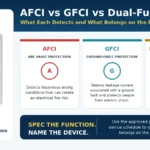
No. GFCI is ground-fault protection; TR is a shuttered face against single-object insertion; WR is weather-resistant construction. A location can require more than one, and each has to be satisfied on its own — a GFCI does not cover the TR requirement.
Why is a tamper-resistant outlet hard to plug into?
The shutters are designed to open only when both slots are pressed simultaneously, so an angled blade or a one-sided push won’t go in. A straight, even insertion usually solves it. If a square, aligned plug still won’t seat, that’s a unit worth checking rather than forcing.
Sources
- NFPA 70, National Electrical Code — official standard reference for NEC article numbering, adoption, and code context:
NFPA 70, National Electrical Code - NEC 406.4(D) public code summary — receptacle replacement rules, including 406.4(D)(2)(a) for non-grounding receptacle replacement, 406.4(D)(5) for tamper-resistant replacements, and 406.4(D)(6) for weather-resistant replacements:
Receptacle Replacement — NEC 406.4(D) - NEC 406.12 public code summary — locations where listed tamper-resistant receptacles are required, plus exceptions such as receptacles more than 5½ ft above the floor and certain dedicated-appliance locations:
Tamper-Resistant Receptacles — NEC 406.12 - NFPA tamper-resistant receptacle guidance — background on the purpose of TR receptacles and the safety reason for shuttered receptacle faces:
NFPA Tamper-Resistant Receptacles - ESFI tamper-resistant receptacle guidance — safety background for tamper-resistant receptacles and child-protection use cases:
ESFI Tamper-Resistant Receptacles - NEMA receptacle background — TR receptacles use an internal shutter / interlocking mechanism that opens when hot and neutral blades are inserted together, while a single object does not release the shutter:
NEMA Connector Background - Local AHJ guidance and adopted code edition — final enforcement depends on the code edition adopted in the project jurisdiction and the local authority having jurisdiction at the jobsite.
Before the replacement PO closes
Browse the duplex receptacle line and GFCI receptacle line for listed TR, WR, and GFCI options.