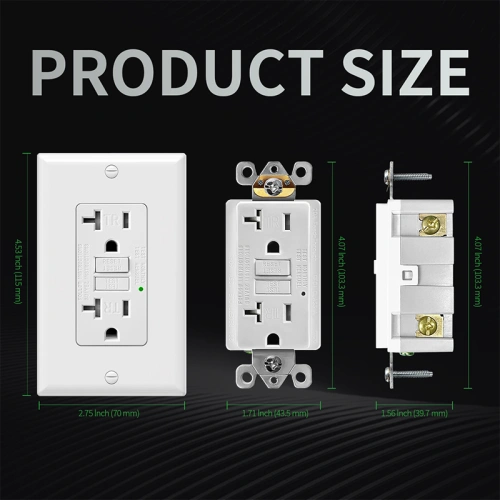
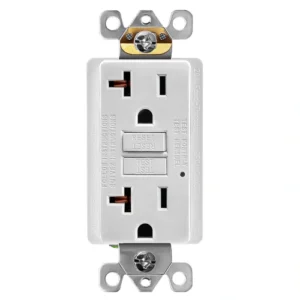
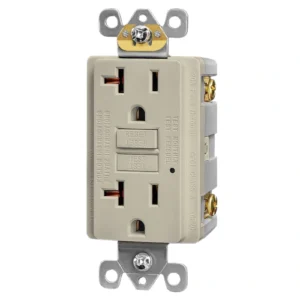
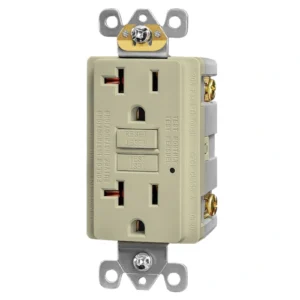
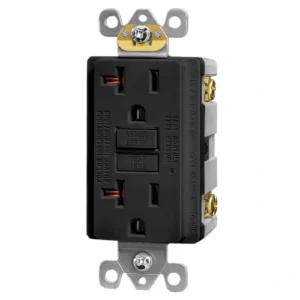
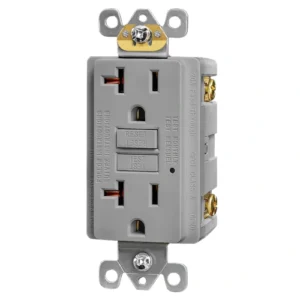
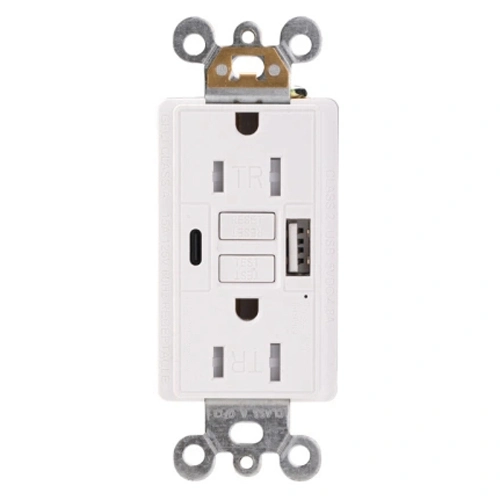
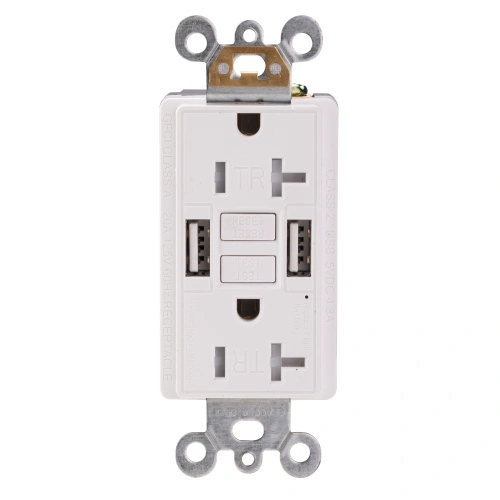
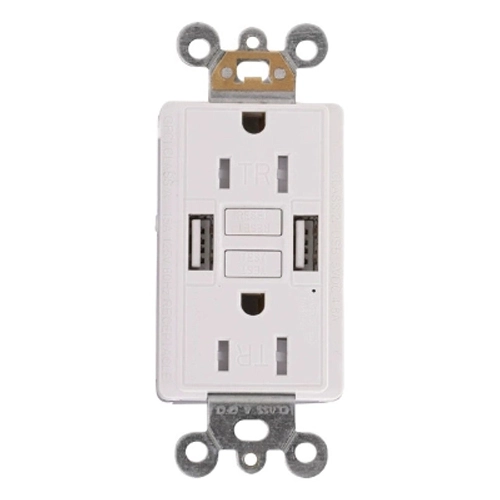
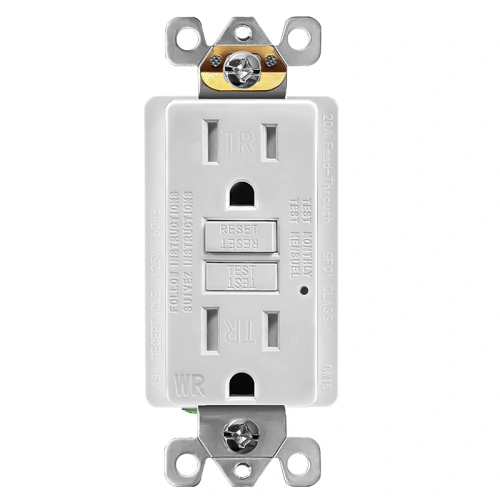
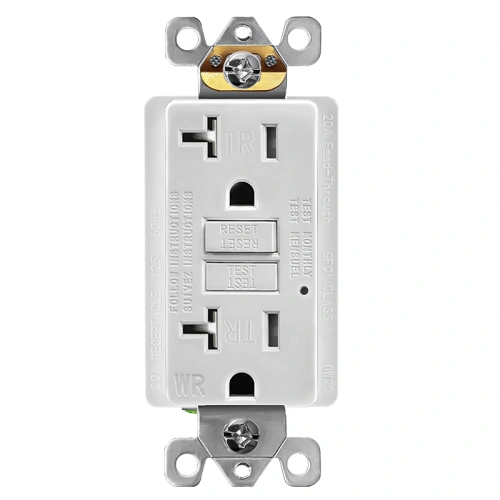
20A Self-Test GFCI Outlet (Non-TR)
- Automatic periodic self-test verifies protection with lockout on failure
- UL/cUL listed under UL 943, Class A: trips at 5mA ±1mA
- Non-TR face: for applications not requiring tamper-resistant construction under NEC 406.12
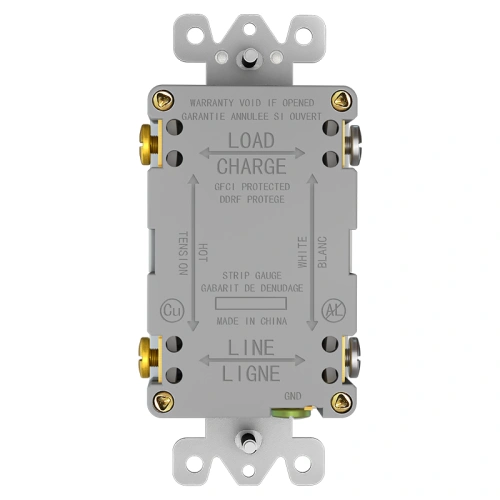
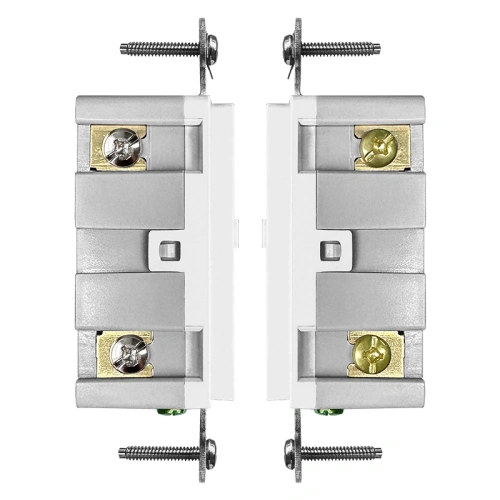
- NEMA 5-20R configuration with back-wire and side-wire terminal options
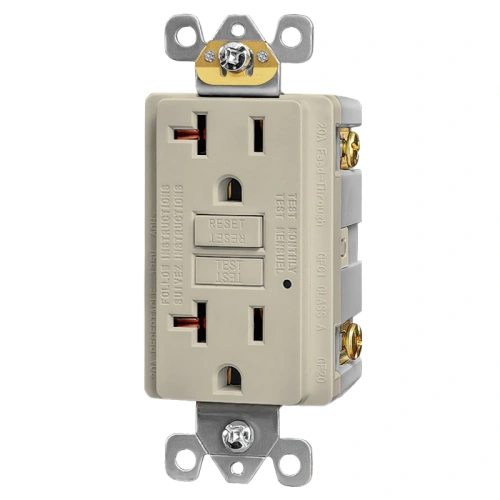
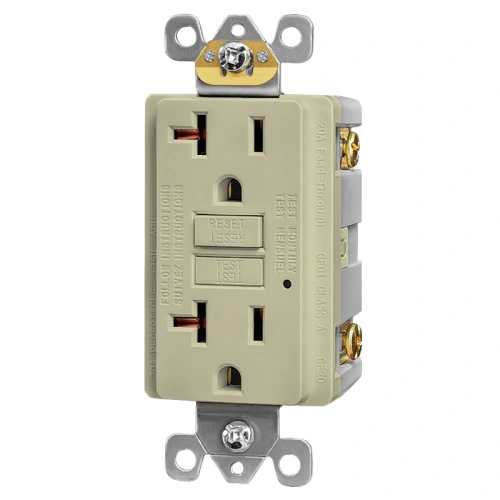
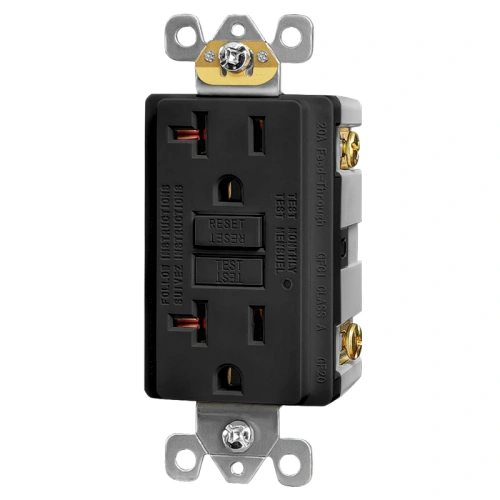
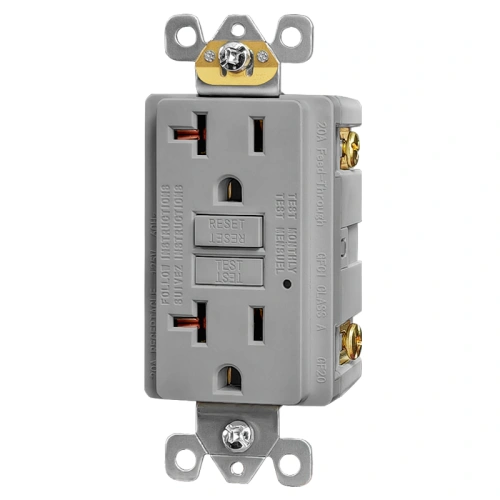
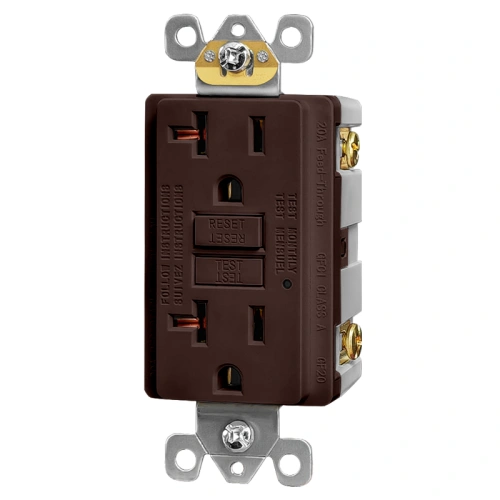
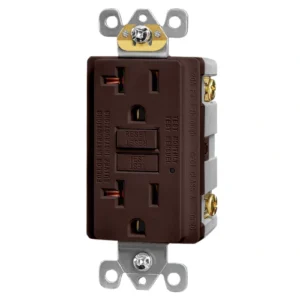
- 7 standard colors — White, Black, Ivory, Almond, Grey, Brown, Graphite
- Wall plate included
Available Colors
What Is a 20A Self-Test GFCI Outlet?
A 20A self-test GFCI outlet is a ground-fault receptacle designed for applications that call for a 20A, 125V wall device with a NEMA 5-20R face pattern. On this product, that means a T-slot receptacle layout, self-test GFCI protection, a Class A trip level, and a non-TR / non-WR configuration for indoor use. The live page also confirms Back Wire and Side Wire, self grounding, and wall plate included, which gives this SKU stronger page-level differentiation than a generic 20A GFCI listing.
This model is for buyers who already know they need a 20A GFCI format, not a standard 15A face. It works well for replacement-driven sourcing, project quoting, and specification comparison where the device rating, receptacle face, and code-scope fit all matter.
Who Should Use This Model
- Contractors sourcing a 20A GFCI replacement with a NEMA 5-20R face
- Distributors building out 20A indoor GFCI inventory
- Facility and MRO buyers who need a clearly identified 20A self-test model
- Procurement teams comparing 15A vs 20A GFCI device formats for project use
When to Choose a Different Model
- Choose a 15A self-test GFCI outlet if the project calls for a standard 15A face instead of NEMA 5-20R
- Choose a TR GFCI receptacle if the installation location requires tamper-resistant construction under the applicable code scope
- Choose a WR GFCI receptacle if the installation environment requires a weather-resistant device
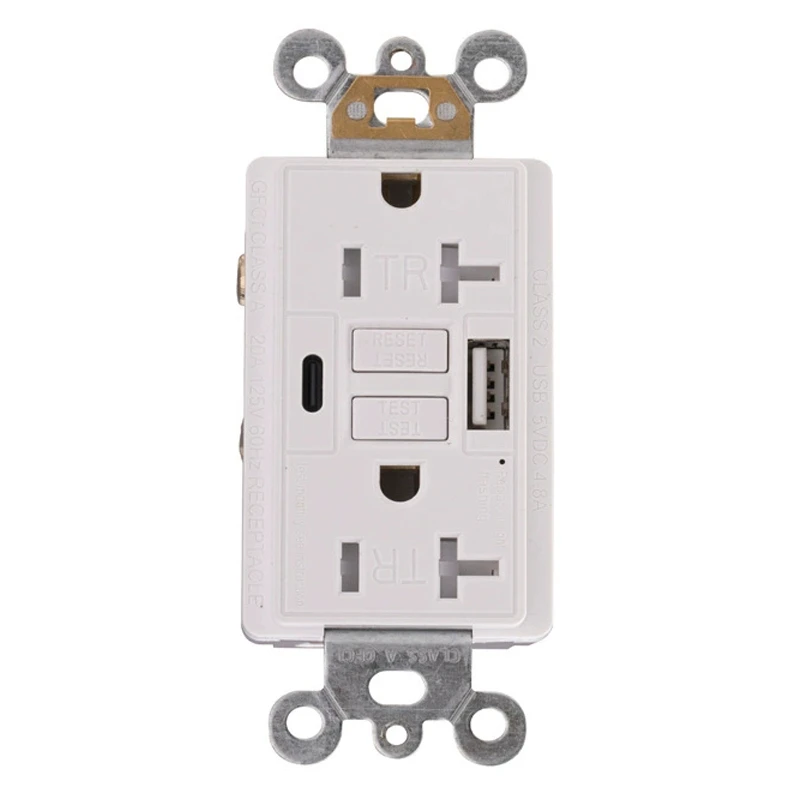
- Choose a USB GFCI receptacle if the project also needs integrated device charging
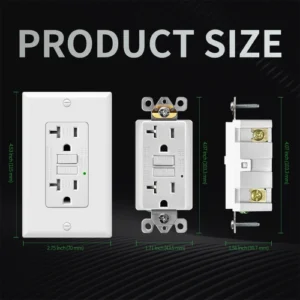
NEMA 5-20R GFCI Outlet Specifications
| Product Code | TS20 |
| Certified Safety | UL, cUL |
| GFCI Type | Self-Test GFCI, Class A GFCI |
| Voltage | 125V |
| Amperage | 20A |
| NEMA | 5-20R |
| Color | White,Ivory,Almond,Black,Grey,Brown,Graphite |
| Finish | Satin |
| Operating Temperature | -35C to 66C(-30F to 150F) |
| Application Sector | Commercial, Multi-Dwelling Unit, Industrial, Residential |
| Features | Alarm, Self-Test, Reset Lockout |
| Wiring Method | Back Wire and Side Wire |
| Pole | 2 |
| Wire | 3 |
| Wall Plate Included | Yes |
| Number of Receptacles | 2 |
| Standards & Certifications | UL/CSA, NEMA WD6 |
| Grounding | Self Grounding |
| Trip Level | Class A, 5mA ±1mA |
| Safety Function | Automatic periodic self-test with lockout on failure |
| Tamper Resistant | None |
| Weather Resistant | None |
| Own US Patents | Yes |
| Face Material | Thermoplastic |
| Body Material | Thermoplastic |
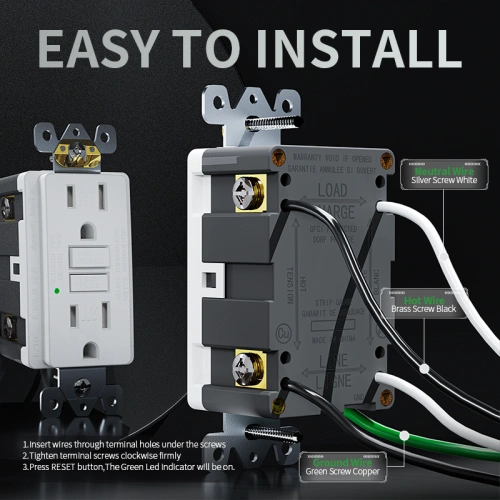
| Terminal | Brass-Hot, Green-Ground, Silver-Neutral |
| Country of Origin | China |
Frequently Asked Questions (FAQ)
What is a 20A self-test GFCI outlet?
A 20A self-test GFCI outlet is a ground-fault receptacle built in a 20 amp device format with automatic self-test monitoring. On this model, that includes a 125V rating, a NEMA 5-20R face, and Class A GFCI protection. It is the right choice when the project calls for a 20A wall receptacle format rather than a standard 15A face.
How can I identify a 20A GFCI receptacle?
The easiest way is to look at the receptacle face. A 20A GFCI uses a NEMA 5-20R configuration, which includes the T-slot pattern that distinguishes it from a standard 15A face. This ShengYu model is also listed as a 20A, 125V, self-test GFCI receptacle on the live specification section.
Does this model include self-testing?
Yes. This is a self-test GFCI outlet, and the current product page identifies it as a self-test GFCI within the UL 943 certification framework. That makes it suitable for buyers looking for a current-generation GFCI replacement rather than an older non-self-test format.
Is this a tamper-resistant 20A GFCI?
No. This page clearly identifies the receptacle as non-tamper-resistant. Buyers should choose this model only for locations where a non-TR device is appropriate for the project scope. If the installation falls within NEC 406.12 tamper-resistant locations, the correct selection is a TR GFCI rather than this non-TR version.
Is this outlet weather-resistant?
No. This product is listed on the page as non-weather-resistant, so it should be positioned as an indoor GFCI receptacle. If the project needs a device for damp or wet locations, use a WR-rated GFCI instead of this model.
What does the T-slot mean on a 20A GFCI outlet?
The T-slot is the face pattern used on a NEMA 5-20R receptacle. It is the visual identifier that tells buyers they are looking at a 20A receptacle format instead of a standard 15A face. For project sourcing, this matters because the receptacle configuration should match the device format required by the job.
Where is a non-TR 20A GFCI outlet typically used?
This type of 20A GFCI is typically used in indoor commercial replacement, equipment-support, maintenance, and other project environments where a 20A GFCI format is required and the installation does not call for a tamper-resistant device. It is better suited to code-aware product selection than broad residential-style positioning.
What NEC issue should buyers check before specifying a non-TR 20A GFCI?
The key NEC issue is whether the installation location falls within the tamper-resistant receptacle requirements of Section 406.12. Public NEC materials continue to show that 15A and 20A, 125V and 250V nonlocking receptacles in specific locations must be tamper-resistant. If the jobsite falls within that code scope, use a TR GFCI instead of this non-TR model.
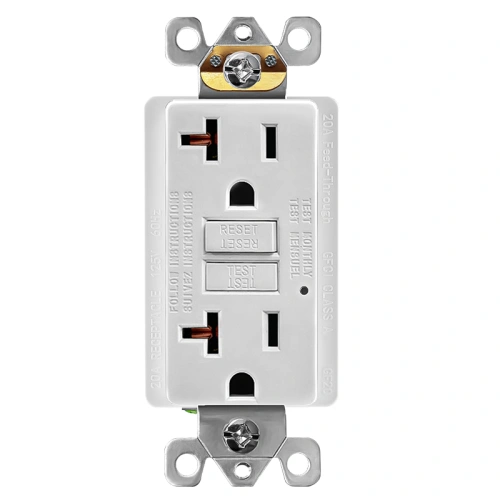
Where This GFCI Is — and Isn't — the Right Choice
Senior & Accessible Homes
Removes the monthly manual test button that many residents skip. Auto-verifies protection every 3 seconds.
UL · cUL · UL 943 Class A
High-Mount & Concealed
Behind appliances, above cabinets, in ceilings — where pressing TEST monthly is impractical. Meets NEC 210.8.
UL · cUL · NEC 210.8
Rentals & Short-Term Stays
Landlords cannot rely on tenants to test monthly. Self-test auto-verifies and simplifies turnover inspections.
UL · cUL · UL 943 Class A
Commercial Washrooms
Facility teams covering many buildings cannot test every device monthly. Auto-denounces end-of-life via LED.
UL · cUL · NEC 210.8(B)
Product Overview
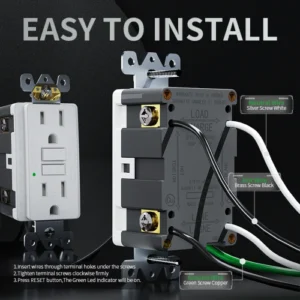
5-Step Quick Wiring Guide for GFCI Receptacles
This is a general wiring reference for standard U.S. GFCI receptacle installation. Always turn off power first and verify local code and product-specific instructions before installation.
- Turn Off Power: Switch off the breaker and verify the electrical box is de-energized with a voltage tester.
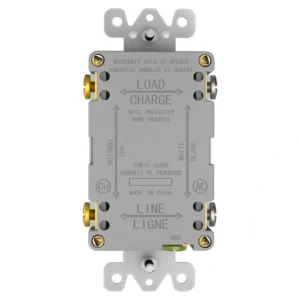
- Identify LINE and LOAD: Locate the incoming power cable for the LINE terminals. If a second cable feeds downstream receptacles, identify it as LOAD and use it only when downstream GFCI protection is required.
- Connect the LINE Wires: Connect the incoming hot wire to the brass LINE terminal, the incoming neutral wire to the silver LINE terminal, and the ground wire to the green grounding terminal.
- Connect LOAD Only If Needed: If downstream protection is required, connect the outgoing hot wire to the brass LOAD terminal and the outgoing neutral wire to the silver LOAD terminal. Do not reverse LINE and LOAD.
- Mount and Test the GFCI: Fold the wires neatly into the box, mount the receptacle and wall plate, restore power, press RESET, then press TEST to confirm proper operation before resetting again.
Product Categories
Send the target market, rating, color, quantity, packaging needs, and any TR / WR / OEM requirements before final quotation.